

The Strategic Compass: Moving from Tactics to True North
In the chaotic world of a startup, founders are forced to be tactical. You ship features, close deals, and put out fires. Branding often feels like a luxury—a coat of paint you can apply once the house is built. But what if this common-sense approach is fundamentally flawed? What if your brand isn't the paint, but the very foundation upon which your business is built?
A weak or inconsistent brand doesn't just look unprofessional; it actively repels your ideal customers, attracts the wrong ones, and forces you into a price-driven race to the bottom. This article is not about choosing a logo. It's a strategic guide for founders to build a brand that acts as a powerful, silent partner in your growth—a brand that builds trust, commands a premium, and turns customers into advocates.
What is a Brand, Really?
A brand is the promise you make to your customers. It's the gut feeling they have when they interact with your company. It's the sum of every touchpoint, from your website's user experience to your customer support emails. A strong brand provides clarity, consistency, and a deep understanding of your audience, and it can be built without a massive agency budget.
The Five Pillars of a Resonant Brand
To move from a tactical to a strategic approach, we can use a framework built on five core pillars. When executed correctly, these pillars create a brand that not only resonates with your target audience but also stands the test of time.
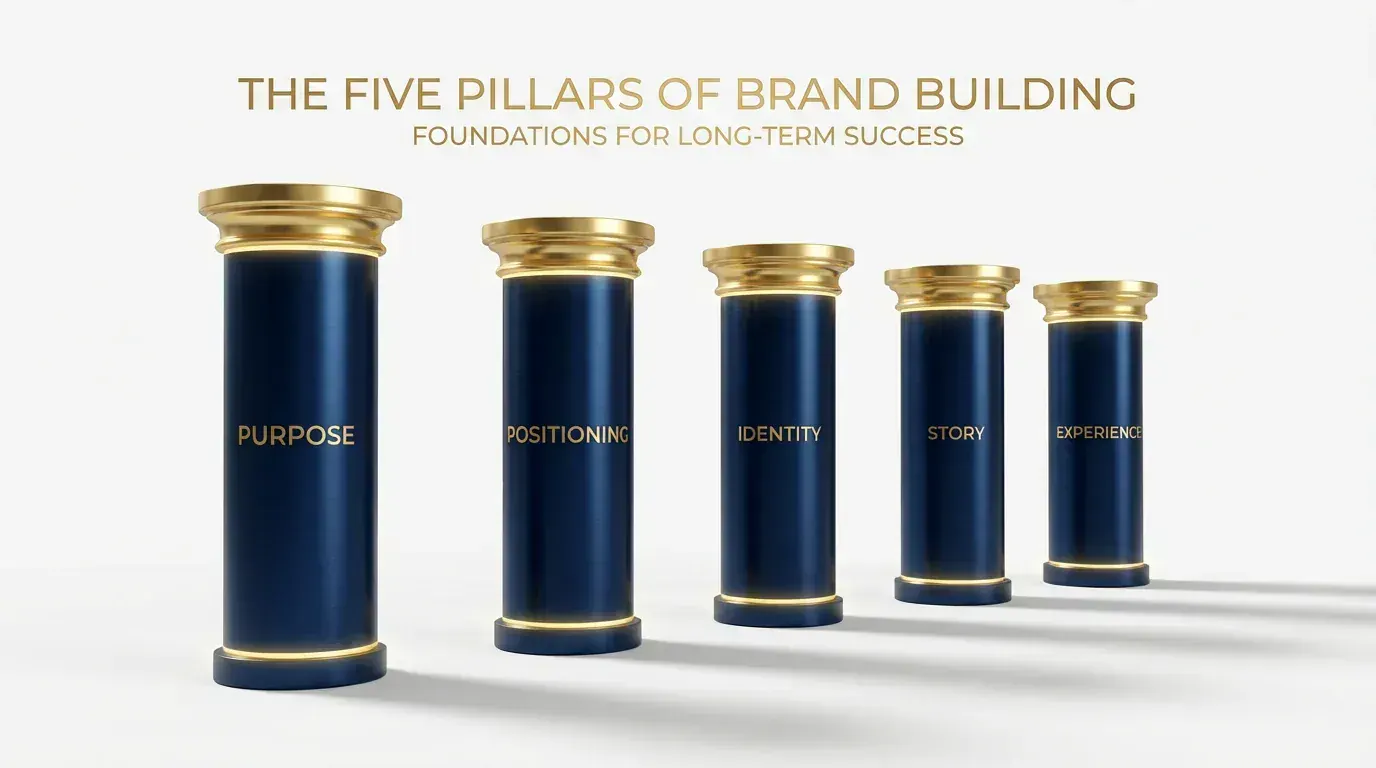
| Pillar | Strategic Question | Outcome |
|---|---|---|
| Brand Purpose | Why do you exist beyond making money? | A clear mission that inspires your team and attracts your ideal customers. |
| Brand Positioning | What unique space do you occupy in your customer's mind? | A defensible competitive advantage that isn't based on price. |
| Brand Identity | How do you look and sound? | A consistent and memorable visual and verbal expression of your brand. |
| Brand Story | What is the narrative that connects you to your customers? | An emotional connection that makes your brand shareable and memorable. |
| Brand Experience | How do you make your customers feel at every touchpoint? | A consistent and exceptional experience that builds loyalty and advocacy. |
1. What is Your Brand's Purpose?
Your brand purpose is the foundational "why" behind your company. It's the problem you are passionate about solving, the change you want to create, or the value you are determined to deliver to the world. This purpose should be clear, compelling, and authentic. It's the North Star that guides every decision, from product development to hiring.
Strategic Application: A B2B SaaS startup might have a purpose of "empowering small business owners to reclaim their time by automating financial busywork." This purpose is not about selling software; it's about enabling a better life for their customers.
2. How Should You Position Your Brand?
Brand positioning is the art of occupying a unique and valuable space in your customer's mind relative to your competitors. Avoid generic claims like "best quality" or "lowest price." Instead, focus on a specific benefit or outcome that your target audience cares about deeply. Your positioning should be specific, defensible, and based on a genuine competitive advantage.
Strategic Application: Instead of being "another project management tool," a startup could position itself as "the project management tool for creative agencies that hate spreadsheets." This specific positioning immediately signals who the product is for and what pain it solves.
3. How Do You Build a Consistent Brand Identity?
Your brand identity is the tangible, sensory expression of your brand. This includes your logo, color palette, typography, and tone of voice. The key to a strong brand identity is consistency across all touchpoints—your website, your social media profiles, your packaging, and your sales presentations. This consistency builds trust and makes your brand instantly recognizable.
Strategic Application: Create a simple brand guidelines document that specifies your logo usage, color codes, fonts, and a few keywords that define your tone of voice (e.g., "professional but not stuffy," "authoritative but not arrogant").
4. What is Your Brand's Story?
Your brand story is the narrative that weaves your purpose and your product into the lives of your customers. It's the story of why you started the company, the challenges you've overcome, and the impact you're creating. A compelling brand story creates an emotional connection that transcends features and benefits, making your brand memorable and shareable.
Strategic Application: Instead of just listing product features, tell the story of the founder's own struggle with the problem your product solves. This makes the brand more human, relatable, and trustworthy.
5. What is the Brand Experience You Deliver?
Your brand experience is the sum of all interactions a customer has with your company. This includes the usability of your website, the responsiveness of your customer service, the quality of your product, and the overall feeling of doing business with you. Your brand experience must be a seamless extension of your brand promise. A great brand with a poor experience is a broken promise.
Strategic Application: Map out the customer journey and identify key touchpoints. At each point, ask: "How can we make this experience more aligned with our brand promise?" This could be anything from a handwritten thank-you note with a first order to a surprisingly helpful error message on your website.
The Strategic Perspective: Avoiding Common Branding Mistakes
Many founders fall into the same traps when it comes to branding. Here are a few to watch out for:
- Inconsistent Messaging: If your website says one thing and your social media says another, you are creating confusion and eroding trust.
- Targeting Everyone: A brand that tries to appeal to everyone ultimately appeals to no one. Be specific about your target audience and tailor your message to their needs and aspirations.
- Treating Branding as a One-Time Project: Your brand is a living entity that needs to be nurtured and managed. Revisit your brand strategy annually to ensure it is still aligned with your business goals.
The Infinite Game: Your Brand as a Long-Term Asset
Building a brand is not a short-term tactic for a quick sales boost; it is a long-term investment in the sustainability and profitability of your business. In a world of endless noise, a strong brand is a signal of trust, quality, and authenticity. It is the ultimate competitive advantage.
The founders who will win in the coming years are those who understand that a great product is not enough. They are the ones who build a brand that connects with their customers on a deeper, more emotional level. They are the ones who play the infinite game of building a business that lasts.