

The Strategic Compass: Is Your Brand a Luxury or a Necessity?
For most founders, "branding" is a four-letter word. It conjures images of expensive agencies, frivolous debates over shades of blue, and invoices that could fund a year's worth of product development. The prevailing wisdom is to focus on the product, get it to market, and worry about the "fluffy" stuff like branding later. This is a catastrophic mistake, and it's rooted in a fundamental misunderstanding of what a brand actually is.
A powerful brand is not a luxury; it is a powerful economic engine. It is the silent force that allows you to command a premium price, attract and retain top talent, and build a loyal customer base that is resistant to the siren song of your competitors. The core challenge is that most founders believe that building a professional brand is a luxury they cannot afford. They see the six-figure price tags from established agencies and retreat to the perceived safety of a DIY logo and a generic website.
This article is a founder's playbook for dismantling that false choice. It provides a strategic framework for building a high-impact, professional brand on a limited budget. It's about making smart, strategic investments in the things that matter and ruthlessly cutting the things that don't.
The Myth of the Million-Dollar Brand: What Are You Really Paying For?
The branding industry has a vested interest in making the process seem complex, mysterious, and expensive. But when you strip away the jargon and the overhead, what you are really paying for are three things: strategy, creativity, and execution. The good news is that as a founder, you can provide much of the strategy yourself. And with a disciplined approach, you can procure high-quality creative and execution at a fraction of the traditional cost.
The Founder's Branding Framework: Where to Invest and Where to Save
This framework is designed to help you allocate your limited resources for maximum impact.
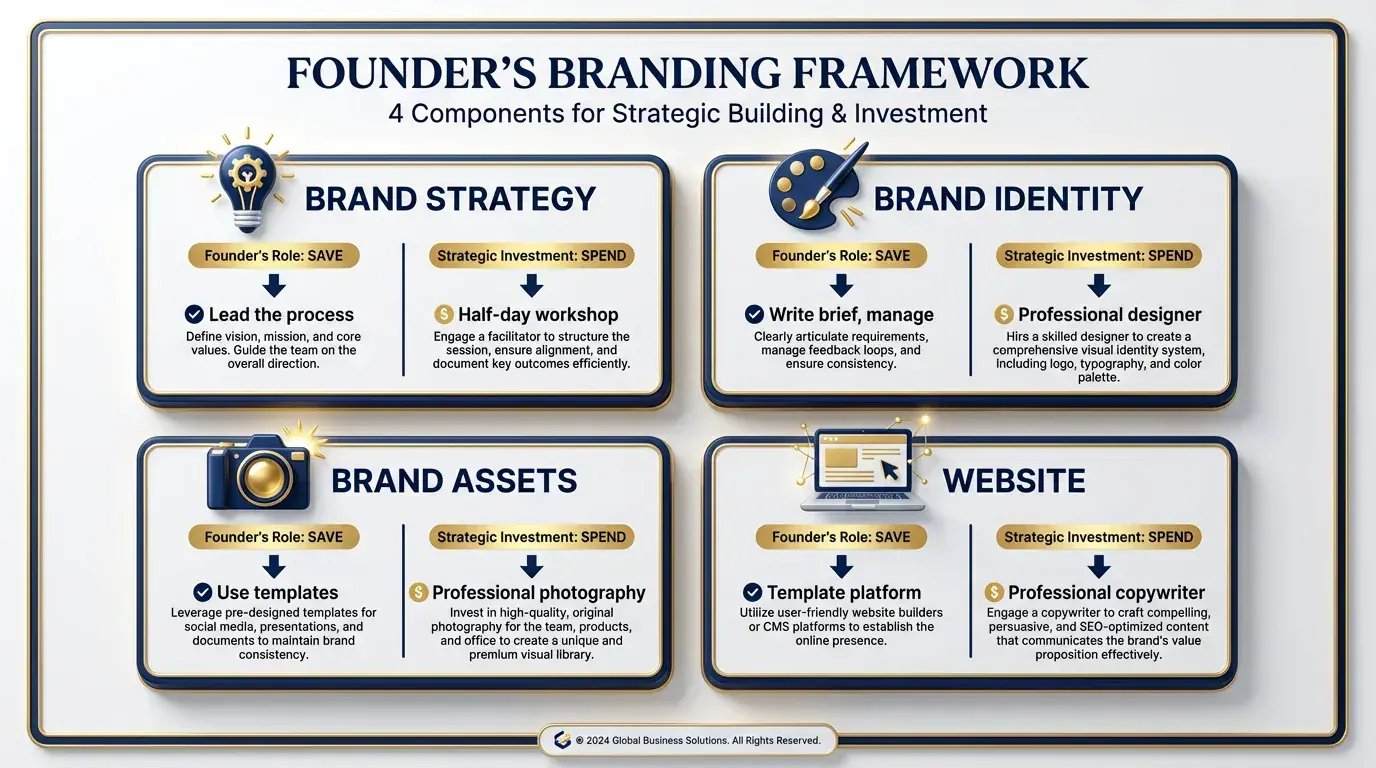
| Component | Founder's Role (Save) | Strategic Investment (Spend) |
|---|---|---|
| 1. Brand Strategy | Lead the process of defining your purpose, position, and story. | A half-day workshop with a strategic facilitator to challenge your assumptions and provide an outside perspective. |
| 2. Brand Identity | Write the creative brief and manage the project. | A professional designer (not a contest site) to create a unique and versatile visual identity system. |
| 3. Brand Assets | Use high-quality templates and stock assets. | A professional photographer for a single day to create a library of authentic, high-quality images of your team and product. |
| 4. Website | Use a modern, template-based platform like Webflow or Squarespace. | A professional copywriter to craft a clear, compelling, and conversion-focused website narrative. |
1. Brand Strategy: You Are the Chief Strategist
No one understands your business, your customers, and your vision better than you do. Do not abdicate the strategic leadership of your brand to an outside agency. You must lead the process of answering the fundamental questions: Why do we exist? Who do we serve? What is our unique point of view? A strategic facilitator can be a valuable investment to guide this process, but the answers must come from you.
2. Brand Identity: Invest in a Professional, Not a Commodity
Your visual identity is the most visible expression of your brand. This is not the place to cut corners. Avoid the temptation of cheap logo contest sites. They are a race to the bottom that will leave you with a generic, uninspired, and often plagiarized design. Instead, find a talented, independent designer with a portfolio you admire. Provide them with a clear, concise creative brief and treat them as a strategic partner. A great designer will not just give you a logo; they will give you a flexible, versatile visual system that can grow with your business.
3. Brand Assets: The Power of Professional Photography
In a world of generic stock photos, authentic, high-quality photography is a powerful differentiator. A single day with a professional photographer can provide you with a library of images that will elevate your brand for years to come. Use these images on your website, in your sales materials, and on your social media channels. They will communicate a level of professionalism and authenticity that stock photos never can.
4. Website: Prioritize the Story, Not the Code
Your website is often the first impression a customer will have of your brand. But a professional website does not require a custom-coded, five-figure build. Modern platforms like Webflow and Squarespace offer stunning, professional templates that can be customized to fit your brand. Where you should invest is in the story. Hire a professional copywriter to help you craft a narrative that is clear, compelling, and optimized for conversion. Great copy is a far more powerful driver of business results than a fancy animation.
The Strategic Perspective: The Compounding Interest of a Great Brand
Building a brand is like investing in the stock market. The earlier you start, the more time your investment has to compound. A strong brand, built early in the life of your company, will pay dividends for years to come. It will make every dollar you spend on marketing work harder. It will make every sales conversation easier. And it will build a moat around your business that is incredibly difficult for your competitors to cross.
The Infinite Game: Your Brand as Your Most Valuable Asset
In the long run, your brand is your most valuable asset. It is the sum of your reputation, your relationships, and the trust you have earned in the market. It is an asset that, unlike your product or your technology, cannot be easily copied. The founders who understand this are the ones who will build businesses that not only succeed but endure.
Building a professional brand on a startup budget is not about being cheap; it's about being strategic. It's about understanding the difference between an expense and an investment. It's about having the discipline to say "no" to the things that don't matter, so you can say "yes" to the things that do.