

The Strategic Compass: Are You Building a Business or a Legacy?
As a founder, you are the heart and soul of your business. You are the visionary, the chief salesperson, and the ultimate decision-maker. Your identity is inextricably linked to the company you are building. But here is a hard truth that most founders are reluctant to accept: your business is not your brand. Your business is a legal entity that sells a product or service. Your personal brand, on the other hand, is a powerful, intangible asset that can transcend any single company or product. It is the sum of your reputation, your expertise, and the trust you have earned in the market.
The core challenge is that most founders are so focused on building their business that they neglect to build their personal brand. They believe that the success of their company will automatically translate into a strong personal brand. This is a dangerous assumption. In today's crowded and noisy market, a strong personal brand is not a byproduct of success; it is a catalyst for it.
This article is a strategic guide for B2B leaders who want to move beyond being a founder and become a recognized authority in their industry. It is a playbook for building a personal brand that not only amplifies the success of your current business but also creates a platform for your future endeavors. It's about the shift from building a business to building a legacy.
The Authority Paradox: Why Expertise is Not Enough
Many founders believe that their expertise is their brand. They have deep knowledge of their industry, their product, and their customers. But expertise that is locked in your head is a wasted asset. To build an authority brand, you must be willing to share your expertise generously and consistently. You must be willing to give away your best ideas, to teach what you know, and to contribute to the conversation in your industry.
This is the authority paradox: the more you give away your knowledge, the more valuable it becomes. The more you teach, the more you learn. The more you contribute, the more you are recognized as a leader.
The Authority-Building Framework: From Expert to Influencer
Building an authority brand is not about self-promotion; it is about creating value for others. It is a disciplined, long-term process of building a platform, a voice, and a following. This framework outlines the four key pillars of that process.
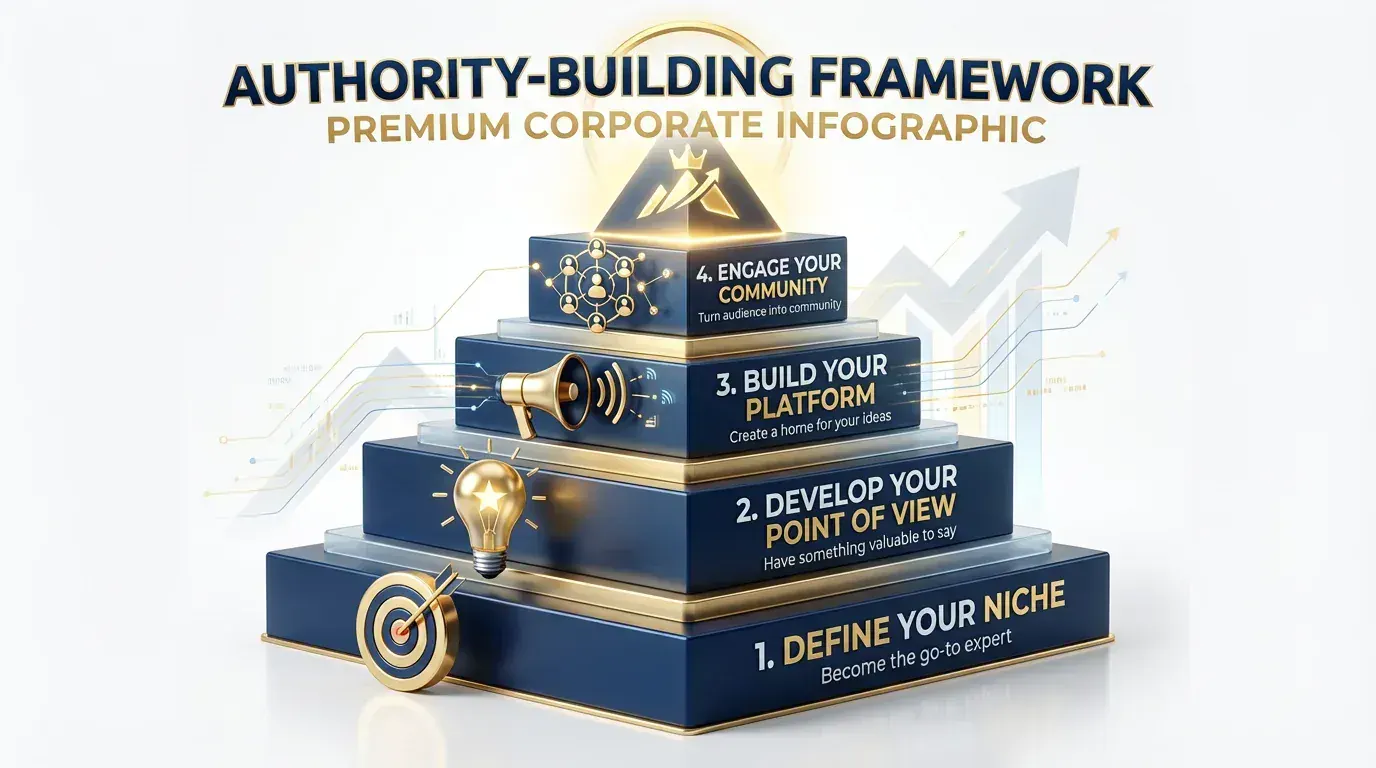
| Pillar | Strategic Action | The Goal |
|---|---|---|
| 1. Define Your Niche | Identify a specific, defensible area of expertise | To become the go-to person for a particular topic |
| 2. Develop Your Point of View | Articulate a unique and compelling perspective | To have something interesting and valuable to say |
| 3. Build Your Platform | Choose a primary content channel and publish consistently | To create a home for your ideas and a destination for your audience |
| 4. Engage Your Community | Participate in the conversation and build genuine relationships | To turn a passive audience into a loyal community |
1. Define Your Niche: The Power of Being a Big Fish in a Small Pond
You cannot be an authority on everything. The first step in building an authority brand is to define a specific and defensible niche. What is the one thing you want to be known for? What is the intersection of your passion, your expertise, and a real market need? The more specific your niche, the easier it will be to dominate it.
Strategic Application: Instead of being a "marketing expert," you could be "the leading authority on building strategic partnerships for B2B SaaS companies."
2. Develop Your Point of View: Don't Just Report the News, Shape the Conversation
Once you have defined your niche, you must develop a unique and compelling point of view. It is not enough to simply regurgitate the conventional wisdom. You must have something new to say, a different way of looking at the world, a contrarian take that challenges the status quo. Your point of view is the intellectual engine of your personal brand.
3. Build Your Platform: The Home for Your Ideas
Your ideas need a home. You must choose a primary content platform and commit to publishing consistently. This could be a blog, a podcast, a YouTube channel, or a LinkedIn newsletter. The specific platform is less important than the consistency of your effort. Your platform is where you build your audience, demonstrate your expertise, and create a library of valuable content that will work for you 24/7.
4. Engage Your Community: From Monologue to Dialogue
Building an authority brand is not a monologue; it is a dialogue. You must be an active participant in the conversation in your industry. This means responding to comments on your content, participating in online forums, speaking at industry events, and building genuine relationships with other leaders in your space. A loyal community is the ultimate validation of your authority.
The Strategic Perspective: The Business Case for a Founder's Personal Brand
Investing in your personal brand is not an act of vanity; it is a savvy business decision. A strong personal brand delivers a tangible return on investment in several ways:
- It Lowers Customer Acquisition Cost: A strong personal brand is a powerful magnet for your ideal customers. It builds trust and credibility at scale, making every sales and marketing effort more effective.
- It Attracts Top Talent: The best people want to work with the best people. A founder who is a recognized authority in their field will have a significant advantage in the war for talent.
- It Creates Optionality: Your personal brand is an asset that you own. It is not tied to any single company. It gives you the freedom and the platform to launch new products, start new companies, or pursue new opportunities in the future.
The Infinite Game: Your Name is Your Most Valuable Asset
In the end, your name is your most valuable asset. It is the one thing that will stay with you throughout your entire career. The time and effort you invest in building your personal brand is an investment in your own future. It is the foundation upon which you can build not just a successful business, but a meaningful and impactful career.
The transition from founder to authority is a journey. It is a journey that requires discipline, generosity, and a long-term perspective. But for those who are willing to embark on it, the rewards are immeasurable.